
Your needs, this model
Does it fit your priorities?
Are you identifying an older two-camera PIP1610 HD package with both pictures on one local screen?
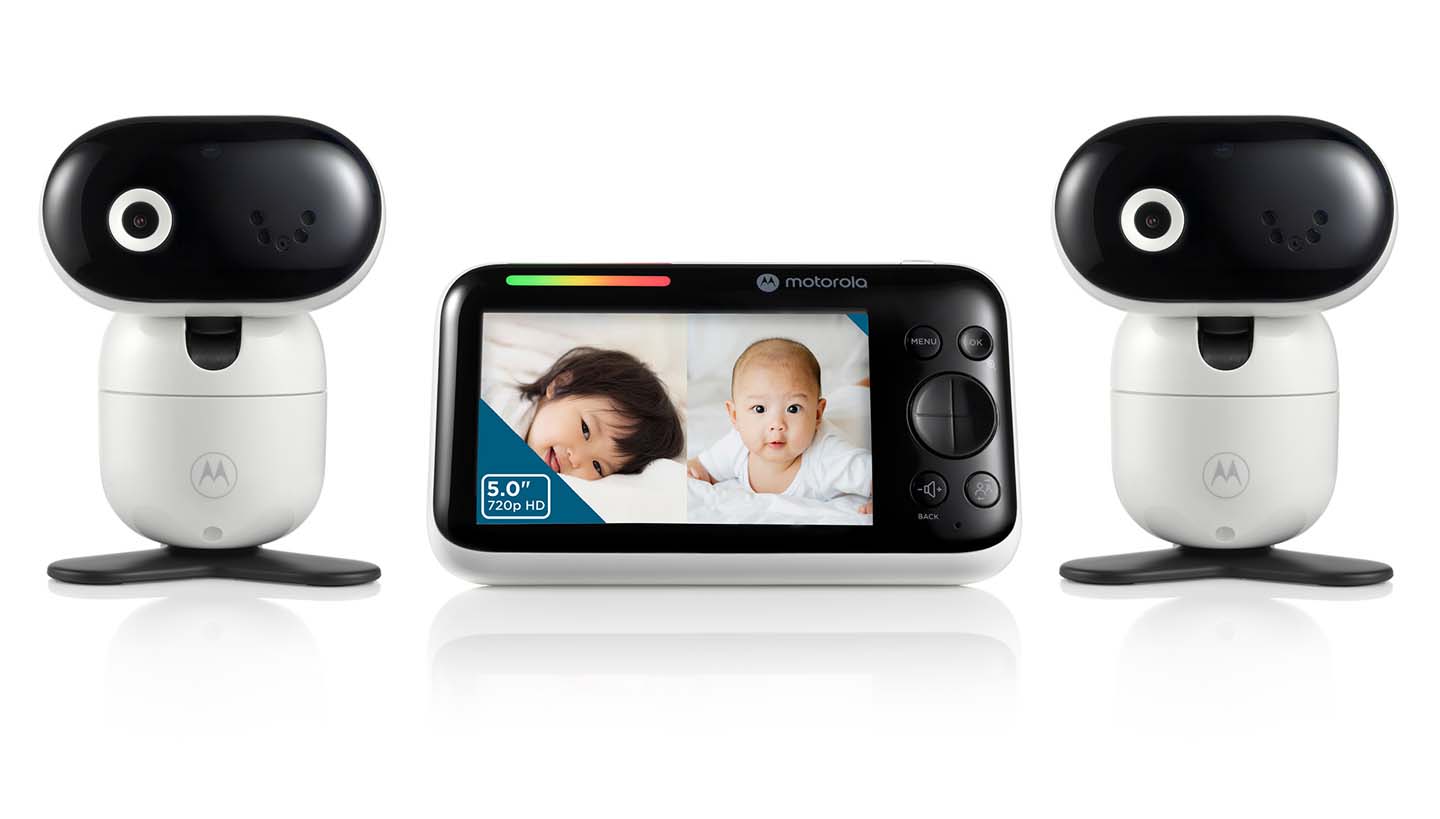
Motorola's exact PIP1610-2 HD support page and model-specific rendering show two cameras with one receiver, and the family manual supports split-screen. The product remains reference-only because its current retail page and stock are unavailable.
Explore this need in the finder →Must the receiver play both rooms' audio at once while showing two pictures?
No. The manual describes split-screen but does not establish simultaneous sound from both rooms; an essential dual-audio need remains unknown and must not be treated as a fit.
Explore this need in the finder →Do you need phone viewing away from home rather than a local parent receiver?
The PIP1610-2 HD is the non-CONNECT variant. The exact support page links the non-CONNECT family guide; remote phone viewing is not documented for this model.
Explore this need in the finder →Does the PIP1610-2 HD have a confirmed six-hour continuous screen-on runtime or tested 1,000-foot open-space range?
No. The shared manual states a six-hour maximum for battery use but gives no screen-on test condition or numeric open-space range protocol; neither strict requirement is established.
Explore this need in the finder →A two-camera PIP1610 HD reference, not a live buying pick
The Motorola PIP1610-2 HD is the two-camera sibling of the non-connected PIP1610 HD. Motorola’s product-support page names the exact -2 model, and its matching product image shows two motorized cameras with one parent monitor. The shared English guide lists PIP1610-2 HD by name and explains that the family supports more than one camera. The exact retail detail page now returns 404 and the checked U.S. shop collections no longer show this kit as an available product, so this review is a model-identification and ownership reference, not a current purchase recommendation. It should not be confused with the separate PIP1610-2 HD CONNECT package, which has a different Wi-Fi/app path and its own assessment.
Two pictures fit one five-inch screen
The useful difference from standard PIP1610 HD is not a larger receiver; it is the second camera included with this twin configuration. Motorola describes a five-inch 720p parent display and split-screen viewing for two rooms. The family manual also allows a caregiver to select one registered camera, cycle between registered cameras at roughly 12-second intervals, or turn split-screen on when more than one camera is paired. A split view keeps both rooms visible at once, but each image uses less of the screen than a single full-size view. Sequential cycling is a different arrangement again: it changes which camera picture is shown over time rather than displaying both at once.
The manual’s split-screen description does not promise that sound from both rooms is mixed or heard simultaneously. If you need two room audio feeds open at the same time, treat that capability as unknown and do not choose the PIP1610-2 HD on the assumption that split-screen means dual audio. A caregiver can use camera selection and the parent speaker for an individual feed; while holding the talk-back control, the parent unit stops playing the baby audio until the button is released.
Local radio instead of remote phone viewing
This non-CONNECT package is designed around a direct camera-to-parent-unit connection, not an app account. Motorola’s family manual specifies the 2.4 GHz radio band and warns that walls, metal, reinforced concrete, nearby Wi-Fi, Bluetooth and other electronics can reduce or interrupt the signal. The parent screen therefore offers a straightforward local routine without depending on a household router, but this model does not provide confirmed phone viewing from outside the home. If you need remote access, compare the separately reviewed PIP1610-2 HD CONNECT twin package; do not assume the suffix alone means Wi-Fi.
Both included cameras can be moved remotely from the parent unit, with infrared night vision and digital zoom. The cameras also have room-temperature sensors. The manual describes temperature display, a visual threshold change and high/low indications; that is a room prompt, not a calibrated or medical reading. The parent unit adds talk-back, sound-level indicators, ten lullabies, ten audio books and screen-off timers. The sound bars show that sound is being picked up, but the manual does not establish a motion alarm or a measured cry-detection threshold. Camera movement is not motion detection.
Plan two powered camera positions
The cameras must use their supplied AC adapters; the guide says to keep the camera powered from the wall. A twin system therefore needs two safe outlet and cord routes, with each camera and cable kept out of the crib and at least three feet from the child. That setup can be inconvenient if outlets are far from the intended views, but it is more predictable than treating the cameras as portable battery units. Use only the supplied adapters and follow the exact wall-mount and cord instructions.
The parent monitor has a rechargeable battery. Motorola’s family manual lists up to six hours of use as a maximum under ideal conditions, but does not define a continuous-screen-on test. The display can switch off after five, 30 or 60 minutes while audio continues; that power-saving option is not the same as an all-night picture. The manual also gives no numeric open-space range test protocol. Test the link in the rooms where you would actually use it instead of treating a radio-range claim as a promise through floors or walls.
Who should compare this model?
The PIP1610-2 HD is useful to someone identifying a box, checking an existing setup, or comparing an exact older listing that really includes two PIP1610 HD cameras and one parent unit. Its strongest practical advantage over the standard PIP1610 HD is two included local views with split-screen; it does not add the CONNECT model’s phone path. Check the suffix, the number of cameras physically included, and the receiver before buying a used or leftover listing. A product title that only says PIP1610 HD may refer to the one-camera package.
If two rooms must be visible and audible together, compare a monitor whose exact manual explicitly documents dual audio, such as the Infant Optics DXR-8 PRO SS. If local split-screen is enough but you want a newer package, compare the VTech Advanced HQ Max Twin and the separately reviewed PIP1610-2 HD CONNECT; their guides establish different operating details, and neither family’s unknown audio behavior should be guessed. For one room on a local screen, the standard PIP1610 HD review explains the smaller one-camera kit. This PIP1610-2 HD page is retained only as a reference because its exact retail page is no longer available from the manufacturer.
This assessment uses the exact model support page, shared family guide, North American quick-start guide, and an exact model-specific manufacturer image; it is not a hands-on or side-by-side performance test. A baby monitor is an aid, not a substitute for responsible adult supervision or safe-sleep practice. Sources: Motorola PIP1610-2 HD support page, PIP1610 HD User Guide V1, and North American Quick Start Guide V4.
Key details at a glance
| Parent-unit screen | 5 in |
|---|---|
| Published display resolution | Five-inch 720p TFT LCD family display per the exact shared manufacturer manual; the exact -2 variant manual cover and support page identify this family. |
| Camera-to-parent-unit connection | Direct local 2.4 GHz link to the dedicated parent screen; remote phone viewing is not documented for this non-CONNECT model. |
| Cameras in the reviewed kit | 2 |
| Maximum camera units supported | 4 |
| Video rooms visible at once | 2 |
| Phone viewing away from home | No |
| User-replaceable parent-unit battery | No |
| Supplied camera lens setup | Two model-specific camera images show motorized units; the family manual explains parent-unit remote pan/tilt/zoom controls. No motion-alert function is established. |
| Recommended stable operation uses home Wi-Fi | No |
| Audio-only system | No |
| Parent talk-back | Yes |
| Room-temperature readout | Yes |
| Preloaded lullaby count | 10 |
| Parent receivers included | 1 |
Use the exact model’s instructions for operating limits, supplied equipment and version differences.
Sources for this assessment
- Motorola Nursery product support for PIP1610-2 HD, productId 8964
- Motorola 5.0-inch HD Motorized Video Baby Monitor User Guide V1
- Motorola PIP1610 HD North American Quick Start Guide V4
- Motorola Nursery exact PIP1610-2 HD product URL observation
- Motorola Nursery U.S. video baby monitor collection snapshot
- Motorola Nursery Previous Models: While Supplies Last collection snapshot
- Motorola Nursery U.S. store search for PIP1610-2 HD Twin Pack
- Motorola Nursery support-page exact PIP1610-2 HD image
- CPSC SaferProducts exact-name query for PIP1610-2 HD

Check the room and the receiving setup.
Read the exact model's constraints, camera count and supervision limits before choosing a package.