
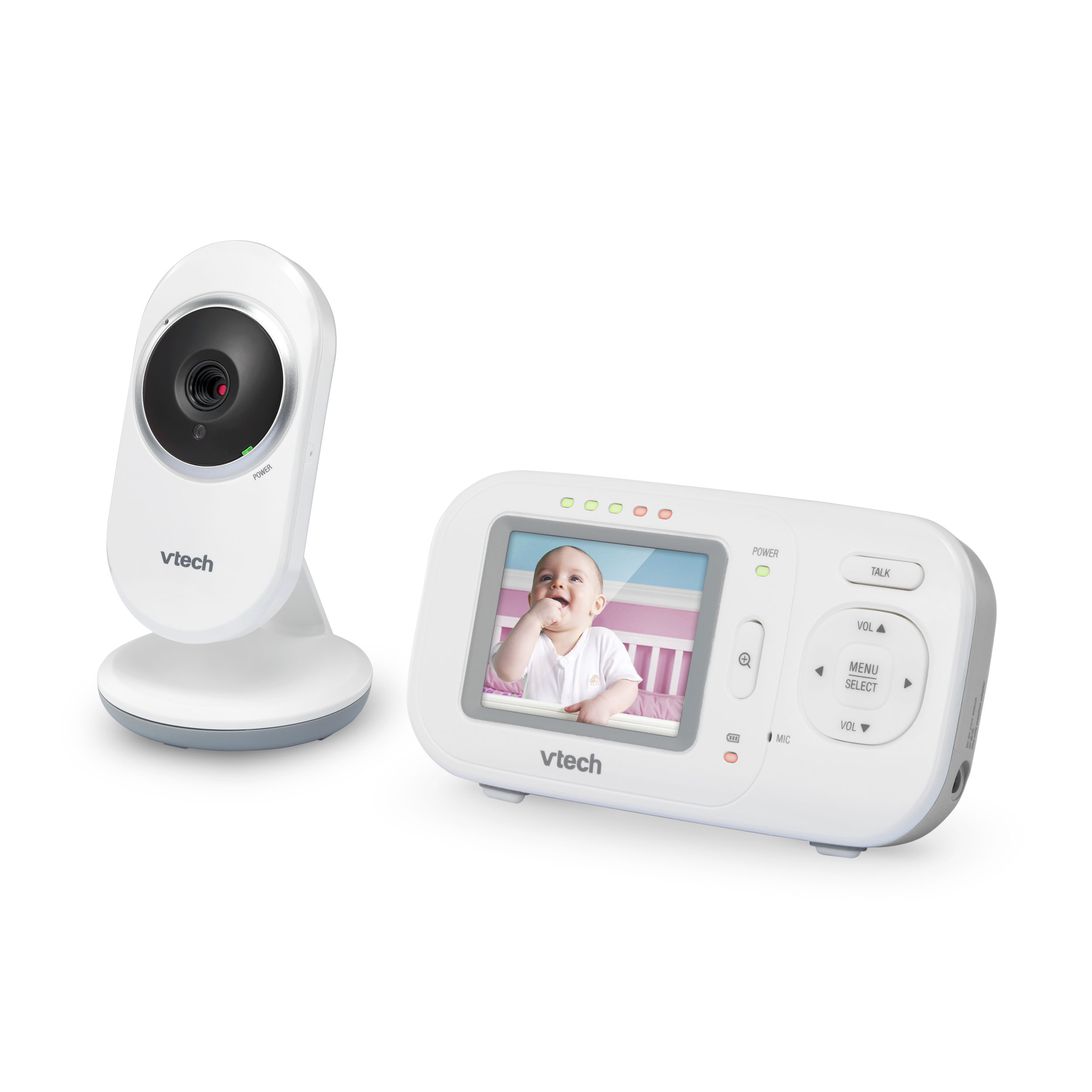
Your needs, this model
Does it fit your priorities?
Is a compact local screen enough for a one-camera check-in without Wi-Fi?
Yes. The exact VM320 support record and U.S. guide identify a one-camera video monitor with a dedicated 2.4-inch QVGA viewer and local radio link.
Explore this need in the finder →Does the base VM320 satisfy a two-camera minimum from the box?
No. The manual says one set for VM320. The VM320-2 is a separate exact package with two sets; it is not part of this base-model assessment.
Explore this need in the finder →Can it provide an away-from-home phone view or remote camera pan and tilt?
No such app feed or remote camera movement is documented for VM320. It is a local viewer with a fixed-position camera whose angle is set during placement.
Explore this need in the finder →Can its battery be treated as a guaranteed six-hour screen-on supply?
No. The manual describes a rechargeable parent-unit battery and charging time but no continuous-screen hours. A strict runtime minimum remains unmet rather than inferred.
Explore this need in the finder →A very small local screen, with no app setup to maintain
The VTech VM320 is a one-camera local video monitor with a dedicated parent viewer. The appeal is not a large display or remote camera movement: it is a straightforward camera-to-handset link for a parent who wants a quick look and sound without configuring home Wi-Fi. The model-specific U.S. support page and its 2020 manual identify the 2.4-inch VM320. VTech separately identifies VM320-2 as a two-camera package, so this review is about the single-camera model rather than a generic VM320-family bundle.
There is a practical reason to distinguish the packages before comparing features. The manual’s box diagram specifies one set for VM320 and two sets for VM320-2. A two-camera capability mentioned elsewhere in the family instructions is not proof that the base box contains a second camera. If you need another room covered from the start, check the VM320-2 assessment instead.
What a 2.4-inch QVGA picture is good for
The exact guide lists a 2.4-inch color LCD at 320 by 240 pixels. That is a compact screen for a quick orientation check, not the spacious viewing area of a five- or seven-inch receiver. A digital zoom enlarges the selected picture, but it cannot add camera detail. If you regularly want to examine a view from across the room or notice small changes in a scene, the VM320’s small display is a meaningful constraint.
The camera is aimed during placement; the parent unit does not steer it around the room. Automatic infrared night vision switches the picture to black and white in low light. This simple arrangement suits a room where one fixed camera angle is enough. A model with remote pan-and-tilt is the better direction if the camera needs frequent repositioning after the adult has left the room.
Local link, sound controls and a useful alert distinction
The U.S. manual specifies the parent and baby units’ 2405–2475 MHz band and 32 channels. Wi-Fi and an app are not part of the documented viewing plan. That keeps setup local, but it also means the VM320 is not a way to check video from outside the house. Test the link where the parent unit will actually be used: the manual’s up-to-1,000-foot outdoor claim is not a promise through a particular floor plan, and VTech support separately notes an indoor figure of up to 150 feet that varies with walls and interference.
The manual describes adjustable microphone sensitivity and sound activation. With sound activation on, the parent screen can sleep and wake after the camera detects sound above the selected threshold; it can also be set to keep audio on while the screen is off. This is sound-triggered behavior, not motion detection. The camera can also play two lullabies and two soothing sounds, and the parent viewer has push-to-talk. A built-in temperature sensor offers a readout and adjustable alert thresholds; treat that as a household cue, not a calibrated or medical measurement.
Battery claims and what the manual leaves unknown
The parent unit has a preinstalled rechargeable 3.6-volt Ni-MH battery. VTech says a full charge takes about 11 hours of uninterrupted charging, and standby time varies with volume and use. The manual does not give a number of hours for continuous video with the screen on. Do not convert charging time or battery chemistry into a runtime estimate if you need a known period away from a power outlet. The baby camera itself uses its supplied adapter, so the camera position depends on access to a suitable outlet.
The manual’s range statement is “up to” 1,000 feet outdoors and explicitly says obstructions and environmental conditions change the result. VTech support gives a separate indoor figure and also warns that wireless equipment, microwaves, walls and other obstacles may affect the connection. Neither figure can predict reception in your house. VTech’s exact support FAQ also says its local-monitor systems are not expandable with newer standalone cameras, so choose the one-camera package only if its included camera count is enough. Set the devices up at least three feet apart during testing to reduce feedback, keep cords out of reach, and follow the guide’s placement instructions.
Who should consider VM320—and what to compare
VM320 is a fit for someone who values a dedicated local viewer, wants one stationary camera and is comfortable with a small 2.4-inch image. It avoids router and app dependence. It is a poor match for a strict two-camera need, phone-away viewing, remote camera movement, simultaneous room viewing, or a guaranteed screen-on battery target. Those needs should change the shortlist rather than be waved away by the model’s general range and convenience language.
For two rooms, compare the exact VM320-2 package, but note its cameras are scanned rather than displayed together. For a larger image and active camera movement, VTech’s VM4263 and VM5263 reviews explain their different screens and controls. The Motorola VM36XL TOUCH CONNECT has both a local screen and a separate app route, but its parent screen, network setup and motorized camera are a substantially different routine. These alternatives are not upgrades for every household: each changes how you check in and what equipment or network access is required.
Placement and model identification
The guide says the monitor is an aid, not a replacement for responsible adult supervision or a medical monitor. Keep the camera outside the crib or playpen, keep cords at least three feet from a child, and do not mount the baby unit above two metres. Test sound reception after setup and again when you move equipment. This is an earlier-model assessment: the current retail offer was not confirmed, so an exact-model search should be treated as a way to identify an existing or remaining VM320 offer, not a statement about availability. The official support page lists VM320 as model 4078 and links the family User’s Manual and Quick Start Guide.
Key details at a glance
| Parent-unit screen | 2.4 in |
|---|---|
| Published display resolution | 2.4-inch color LCD, QVGA 320 × 240 pixels (VTech U.S. manual). |
| Camera-to-parent-unit connection | Direct local radio; exact U.S. manual lists 2405–2475 MHz and 32 channels. No app or away-from-home phone feed is documented. |
| Manufacturer-stated open-space range | 1000 ft |
| Advertised maximum range claim | 1000 ft |
| Cameras in the reviewed kit | 1 |
| Maximum camera units supported | 1 |
| Video rooms visible at once | 1 |
| Phone viewing away from home | No |
| Supplied camera lens setup | One fixed-view camera whose angle is set during placement; the parent unit documents digital zoom, not remote pan or tilt. |
| Recommended stable operation uses home Wi-Fi | No |
| Audio-only system | No |
| Parent talk-back | Yes |
| Room-temperature readout | Yes |
| Preloaded lullaby count | 2 |
| Parent receivers included | 1 |
Use the exact model’s instructions for operating limits, supplied equipment and version differences.
Sources for this assessment

Check the room and the receiving setup.
Read the exact model's constraints, camera count and supervision limits before choosing a package.