
Your needs, this model
Does it fit your priorities?
Would two receivers meet the need if comparing the older one-set reference with current kits?
The exact TM8212 is the one-set owner reference, not a purchase result. The current TM8212-2 is the two-Parent-Unit package for the same single nursery feed.
Explore this need in the finder →If a family needs two rooms audible at once, does this one-set reference suffice?
No. TM8212 has one Baby Unit in its one-set configuration. A separate two-Baby-Unit audio system is the relevant direction, not the two-receiver TM8212-2.
Explore this need in the finder →Would a documented talk-back requirement be better met by the current twin package?
The shared manual documents talk-back for the family, but current U.S. retail identity for the one-set TM8212 was not verified. The exact current TM8212-2 is the supported two-receiver alternative.
Explore this need in the finder →The one-receiver TM8212 is a reference model, not the current twin listing
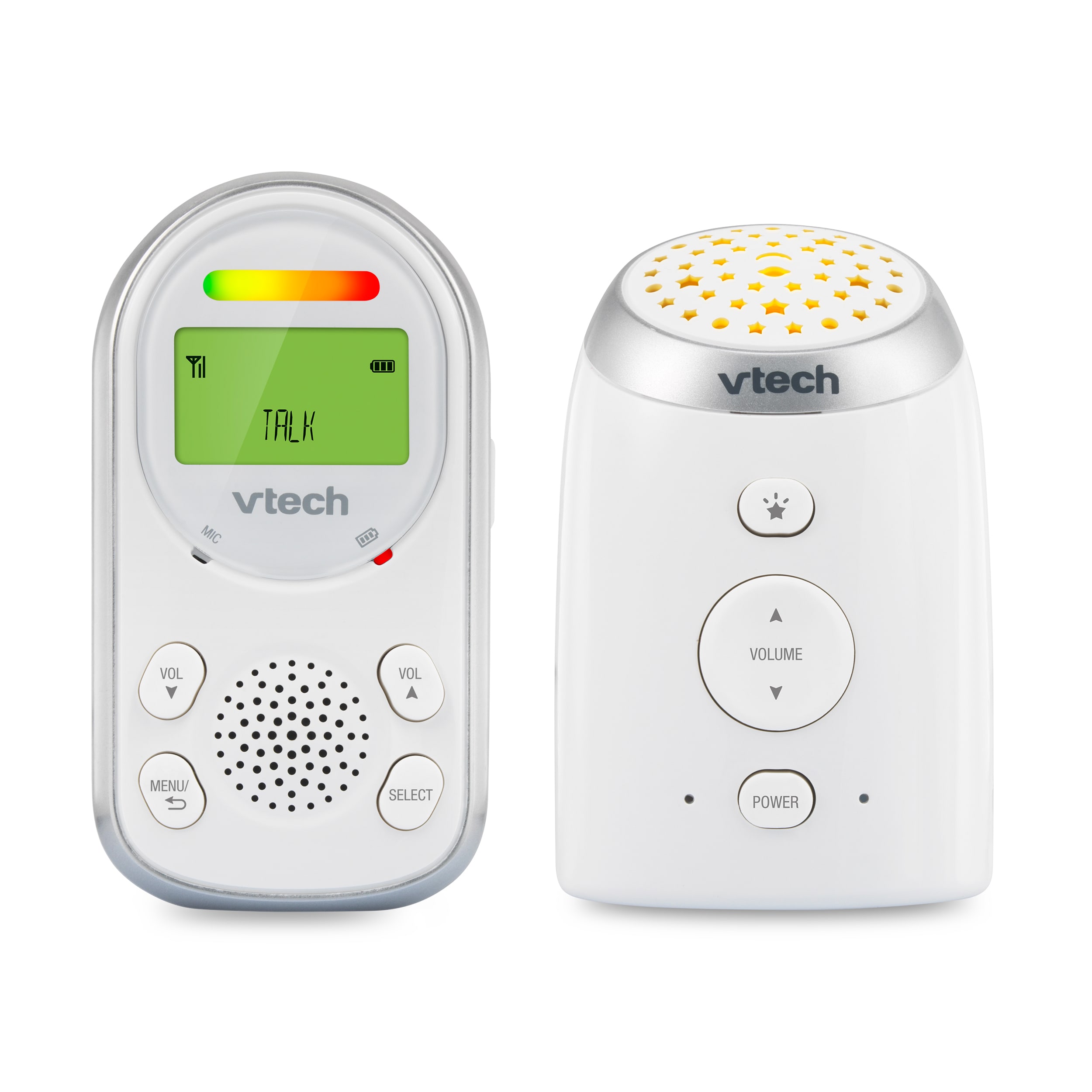
The exact VTech TM8212 is the one-set configuration in the shared TM8212 family manual: one Parent Unit and one Baby Unit. The same manual names the separate TM8212-2 as the two-set package. The U.S. support record still identifies the TM8212, and the legacy official product record shows the model, but I did not find a current exact TM8212 retail page with an Add to Cart control during this review. VTech’s current exact page is for TM8212-2. This page is therefore an owner reference, not a current purchase recommendation; do not let a retailer use the similar suffix as proof that the packages are interchangeable.
For someone who already owns the TM8212, the manual documents local digital audio without Wi-Fi, one sound source and one Parent Unit. It also includes talk-back, five-level visual sound indication, optional vibration/sound alerts and the glow-on-ceiling projector. The U.S. support page links the shared family manual; its exact one-unit image shows one handheld receiver and one nursery unit. That package can serve a caregiver seeking one local audio receiver, but it cannot show video, connect to a phone or hear a second room at the same time.
Its features come with specific operating limits
The family guide describes up to 1,000 feet outdoors and up to 160 feet indoors, while warning that walls, doors and other obstructions change real range. It also specifies more than 6.5 feet between Parent and Baby Units to reduce feedback. These figures are not a measurement of a particular home. Test sound at the intended position and use the one included Baby Unit outside the crib or playpen, with its cord more than three feet from the child.
The manual has five VOX sensitivity levels and lets the Parent Unit show sound visually. Optional sound and vibration prompts activate at the loud/red sound-indicator threshold rather than classifying a cry. Talk-back sends a caregiver’s voice to the Baby Unit, but nursery sound is not transmitted to the Parent Unit while talk is active. The receiver’s battery description is especially important: the manual says battery alone lasts only a short time and recommends AC for continuous monitoring. It lists an 11-hour full-charge time; VTech support FAQ says approximately 12 hours. Neither source supplies a verified all-night runtime.
VTech’s newer TM8212-2 page advertises up to eight hours of cordless use, but the shared manual’s short-time-only battery warning means that claim should not be transferred into a guaranteed TM8212 runtime. The Baby Unit also depends on its adapter; backup power for that transmitter is not documented. This is a simple local system, not an outage-proof configuration.
When the one-unit distinction matters
If two caregivers need separate receivers, the exact TM8212-2 package is the relevant current model. Its second Parent Unit changes who can carry a listener, not how many rooms the system covers. If you need a simple one-receiver sound link without talk-back or vibration alerts, the current TM8112 is another exact VTech family choice and adds the ceiling projector, but it is a different model with different control features and separate battery-source conflicts. If video is essential, choose a dedicated-screen or app camera system; a sound indicator is not a camera display.
For an existing unit, check the model label on both receivers before looking for a replacement battery or adapter. Set up the Baby Unit and Parent Unit with the manual’s spacing guidance, then test the sound path from the caregiver’s usual locations. A shop listing for the -2 model is not evidence that a replacement part or newer accessory fits the one-set reference.
For a household already using this model, the manual remains the authority for safe positioning, charging and link testing. Do not rely on it instead of adult supervision. The TM8212 support page, legacy official product record and TM8212 / TM8212-2 family manual establish what is known. Availability remains unconfirmed, so this reference must stay out of purchase matches.
Key details at a glance
| Camera-to-parent-unit connection | Direct local DECT 6.0 digital audio; no camera picture, Wi-Fi, internet, app or phone-away viewing is documented. |
|---|---|
| Manufacturer-stated open-space range | 1000 ft |
| Advertised maximum range claim | 1000 ft |
| Cameras in the reviewed kit | 0 |
| Maximum camera units supported | 0 |
| Video rooms visible at once | 0 |
| Phone viewing away from home | No |
| Recommended stable operation uses home Wi-Fi | No |
| Motion alert | No |
| Audio-only system | Yes |
| Parent talk-back | Yes |
| Room-temperature readout | No |
| Parent-unit batteries included | Yes |
| Camera-side mood light | No |
| Separate under-mattress movement-monitor system included | No |
| Included crib-mount option | No |
| Eco Max quiet-interval mode | No |
| Starry night projector | Yes |
| Parent-unit vibration prompt | Yes |
| Parent receivers included | 1 |
Use the exact model’s instructions for operating limits, supplied equipment and version differences.
Sources for this assessment
Check the room and the receiving setup.
Read the exact model's constraints, camera count and supervision limits before choosing a package.