
Your needs, this model
Does it fit your priorities?
Do two listeners need separate local receivers and Baby Unit battery support?
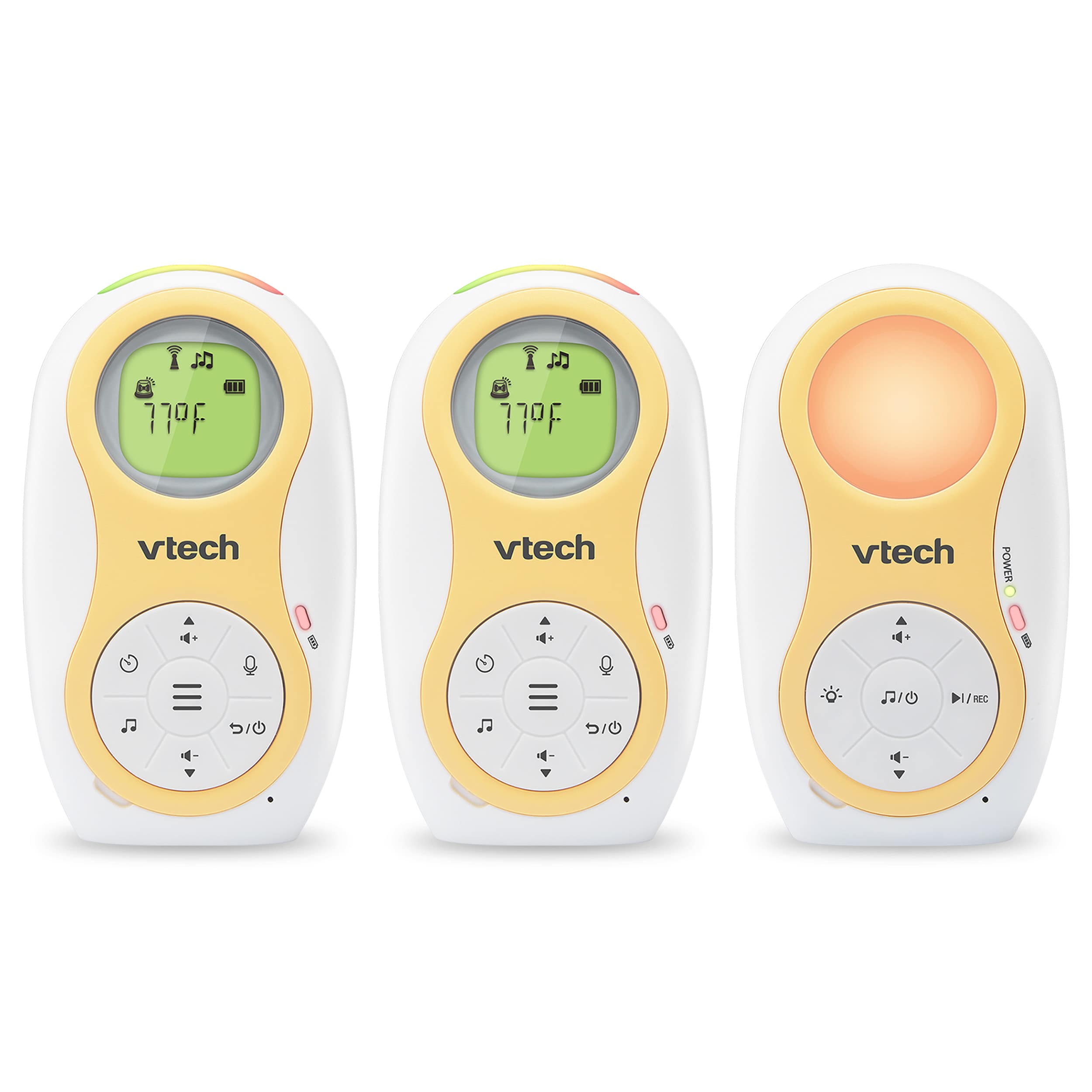
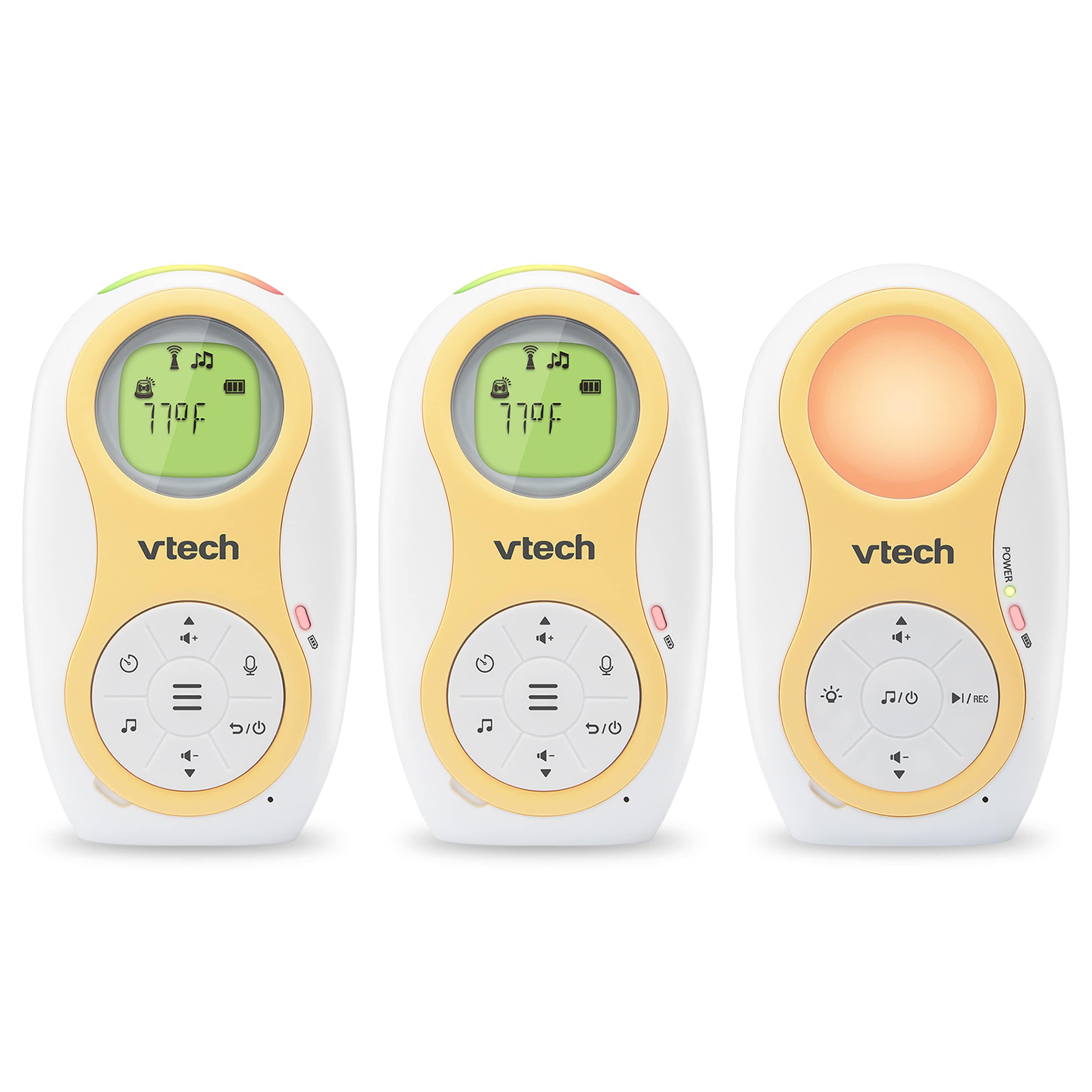
The exact -2 package includes two Parent Units and one rechargeable-battery Baby Unit. It is one-room audio.
Explore this need in the finder →Must at least three Parent Units be included?
The exact DM1215-2 package lists two Parent Units, not three.
Explore this need in the finder →Are two simultaneous nursery feeds required?
The two included Parent Units both listen to one Baby Unit, so a two-room need requires another configuration.
Explore this need in the finder →Two receivers, plus batteries in both kinds of unit
The VTech DM1215-2 is the separate two-Parent-Unit package in the enhanced DM1215 audio family. Its exact current U.S. page identifies the model and lists two Parent Units, one Baby Unit, three adapters and three rechargeable batteries. The Baby Unit count is still one: this is a two-listener kit, not a system for two nursery rooms. Each caregiver can keep a local receiver nearby and hear the same source. A requirement for simultaneous sound from two different rooms needs two Baby Units and a verified multi-room plan; adding a Parent Unit does not create that capability.
The same package includes the distinctive DM1215 family features: a soft-glow Baby Unit light, four lullabies, a 20-second voice-message recording option, talk-back, a reminder timer and blue replacement face plates. The current page describes rechargeable batteries in both unit types, which is different from DM221-2’s adapter-dependent Baby Unit. That convenience is useful for temporary repositioning, but it should not be treated as a no-power-failure guarantee. Check charge state and connection, and keep adapters available for regular operation.
What changes for two caregivers
Two receivers mean a caregiver can leave one in a regular listening spot and carry the other, rather than handing over a single device. The two Parent Units listen to the same Baby Unit. VTech’s manual lists a five-channel local radio link, and its current page describes the pair as digital DECT 6.0; the family guide is the more detailed source for operating and safety instructions. The published distance is up to 1,500 feet, not a room-by-room promise. Test both receivers in the actual home and at their intended positions, since the path through walls, floor structure and electronics changes reception.
The Parent Unit can send talk-back, and the manual describes the Baby Unit speaker playing the parent’s voice while nursery audio is paused at the receiving Parent Units. It is a one-way soothing prompt, not a live two-way conversation. The manual describes five sensitivity levels and a Parent Unit sound-alert beep; the highest level keeps the speaker continuously on. The exact support FAQ also explains a “vibe alert” setting and says vibration mode turns that receiver’s speaker off, while the shared family manual does not describe vibration. Because those exact-source records disagree, treat vibration as unresolved for this package rather than a guaranteed feature. In particular, do not assume the alert will give a vibration while still playing audio aloud.
Runtime headlines need context
The product page says up to ten hours for the Parent Unit and up to four for the Baby Unit, but another general feature block says up to eight hours for a Parent Unit. The family manual explains that battery runtime varies with use, battery age and settings; it asks users to follow charging instructions and provides no fixed independent runtime promise. It says a full initial charge takes about twelve hours, not that the devices last that long. The package’s three batteries cover both Parent Units and the Baby Unit, but a larger bundle should not be confused with verified overnight endurance. Establish an outlet-based normal setup and use the battery capability for portability or brief disruptions, then check charge indicators.
A reminder timer can be set in 30-minute increments up to a day, but it is just a caregiver-set reminder. The lullabies and recorded voice are optional sound sources, not a monitoring signal. The adjustable night light is on the Baby Unit; the support FAQ says it switches off after 15 minutes with no detected sound. If the light is central to the routine, verify that behavior with the exact manual and unit, and make sure its placement and cord are safe. No Parent Unit or Baby Unit belongs in the crib or playpen.
Who should prefer it?
Choose DM1215-2 when two caregivers need independent local receivers for one room and the extra Baby Unit battery, lullaby and voice-message controls are useful. If only one person will carry a receiver, the single-parent DM1215 preserves the core operating plan with fewer receivers. If two rooms must be heard simultaneously, neither DM1215 package is sufficient; look for a documented dual-Baby-Unit system. If the need is video or phone access, choose a camera monitor. If vibration is decisive, DM221-2’s manual explicitly documents vibration at a sound threshold, whereas the DM1215-2 sources conflict.
Source checks: the exact DM1215-2 product page, DM1215-2 support page and FAQ, and family manual covering DM1215 and DM1215-2. The support page adds the vibration FAQ; its omission from the guide is why the feature remains uncertain.
Key details at a glance
| Camera-to-parent-unit connection | Direct local DECT 6.0 audio link; family guide specifies 1921.536–1928.448 MHz and five channels. |
|---|---|
| Manufacturer-stated open-space range | 1500 ft |
| Advertised maximum range claim | 1500 ft |
| Cameras in the reviewed kit | 0 |
| Maximum camera units supported | 0 |
| Video rooms visible at once | 0 |
| Phone viewing away from home | No |
| User-replaceable parent-unit battery | Yes |
| Recommended stable operation uses home Wi-Fi | No |
| Motion alert | No |
| Audio-only system | Yes |
| Parent talk-back | Yes |
| Room-temperature readout | No |
| Parent-unit batteries included | Yes |
| Camera-side mood light | No |
| Separate under-mattress movement-monitor system included | No |
| Included crib-mount option | No |
| Eco Max quiet-interval mode | No |
| Starry night projector | No |
| Parent receivers included | 2 |
Use the exact model’s instructions for operating limits, supplied equipment and version differences.
Sources for this assessment
Check the room and the receiving setup.
Read the exact model's constraints, camera count and supervision limits before choosing a package.