
Your needs, this model
Does it fit your priorities?
Do two local split-screen pictures with one selected audio feed meet your need?
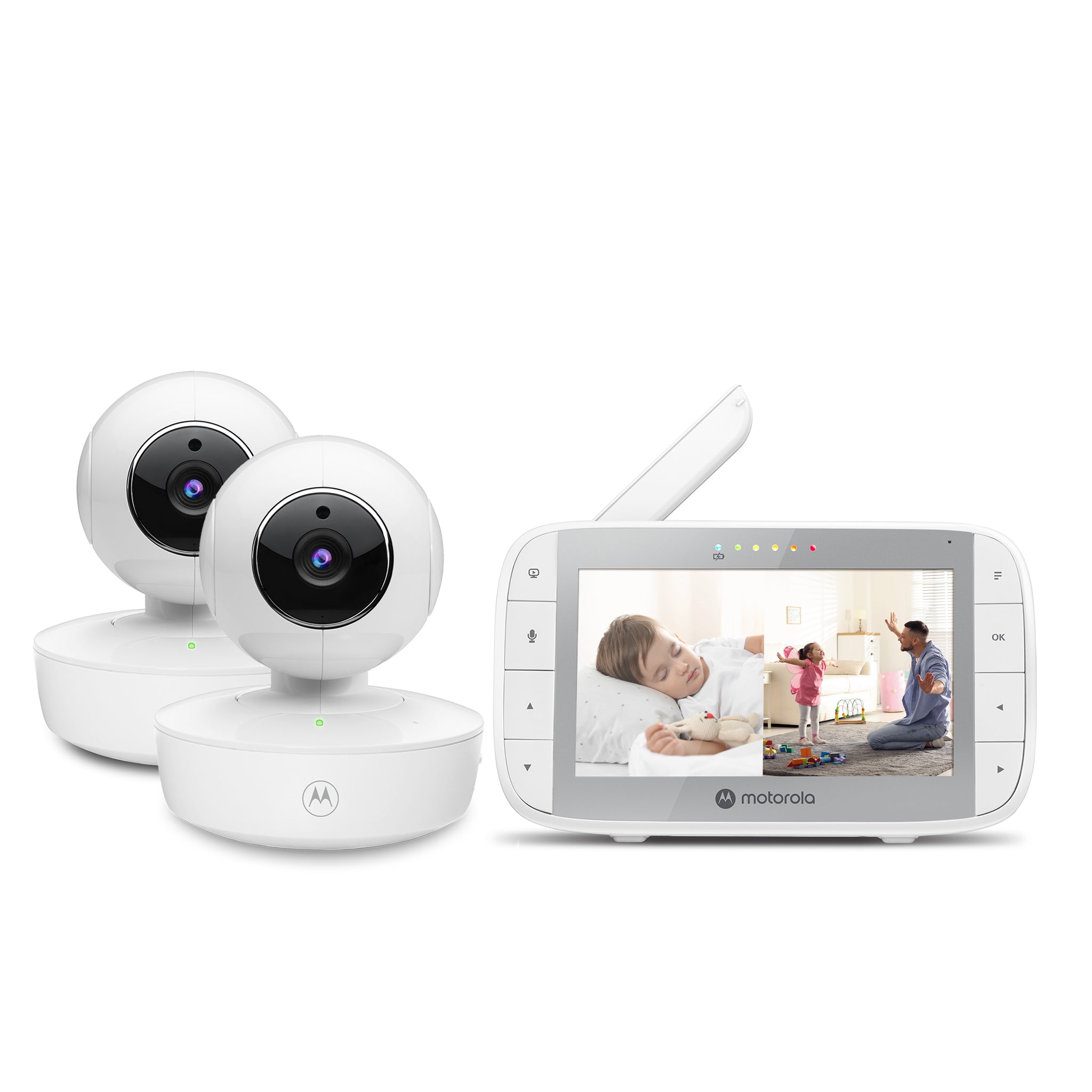
The Twin Pack includes two cameras and the manual describes split pictures while selecting one camera for sound.
Explore this need in the finder →Is a dedicated local parent screen enough, without phone access?
The exact twin kit supplies two cameras for its local screen; phone viewing is not documented.
Explore this need in the finder →Are two remotely steerable cameras and a five-inch screen suitable?
Both cameras are remotely steered from the parent unit; the display is five inches at 480 x 272, not established as 720p.
Explore this need in the finder →A two-camera local system when both pictures matter
The Motorola VM36XL-2 Twin Pack is the two-camera version of the VM36XL family: its exact U.S. shop record names the Twin Pack and SKU 810036771092, and the product listing showed sold out on October 23, 2026. It adds a second camera to the same five-inch parent display, direct 2.4 GHz FHSS connection and remote pan/tilt controls. Both cameras are battery-powered as well as adapter-powered, so they can be moved for short periods without mains power. The extra camera changes what you can watch at once, not the system’s basic receiving setup: one parent screen, no phone app or home Wi-Fi required.
The parent display is listed as a 5-inch TFT color panel with 480 × 272 resolution. Although one promotional description uses “HD” language, the product specification and family guide do not establish a 720p screen. The system is more suited to two-room visual coverage than to a shopper who needs high-resolution app video. At the check date, the U.S. product page was sold out; that is a dated stock observation, not a statement that the exact model is discontinued or permanently unavailable.
Two pictures do not mean two open audio feeds
The family manual explains that split-screen displays multiple paired cameras at once and that the parent controls select which camera’s audio is heard. The Twin Pack can therefore suit a caregiver who wants both rooms visible in one glance while listening to one chosen room. It does not meet an essential requirement to hear two rooms simultaneously. In split-screen, talk-back goes to the selected camera, and the manual says zoom does not work in that mode. If you need a larger image or remote camera movement, select one feed; if you want an overview of two rooms, accept smaller split pictures and one selected audio source.
The manual also describes a scan mode that cycles through registered cameras about every 12 seconds. Scan is useful as an alternative when a caregiver prefers a full-screen view that changes between rooms, but it is not two pictures at once. With two cameras in the box, split and scan are genuine operating choices. Pairing additional cameras up to the system’s stated four-camera capacity does not change the one-audio-at-a-time limit documented in this guide.
Each included camera has motorized pan and tilt controlled from the parent unit and a 2× digital zoom. Night vision switches to black-and-white in low light. Five lullabies or soothing sounds can be played through a camera. A temperature readout appears on the receiver and the manual describes red visual indications below 57°F or above 84°F. These are household conveniences, not medical or validated sleep-safety functions; the manual does not establish a motion alert or cry-recognition threshold.
Battery portability has a short, specific role
The manufacturer lists a 2,000 mAh parent-unit battery with up to five hours of operation and 1,200 mAh batteries in the cameras for up to three hours of backup away from an outlet. These figures help when moving the receiver or shifting a camera for a short period, but the guide does not define a continuous screen-on test routine. I keep the model’s strict screen-on runtime field unknown: “up to five hours” is not a confirmed minimum that should pass a hard five-hour video requirement. On battery, a display timeout can switch off the picture after five, 30 or 60 minutes while the audio remains active. That mode can conserve power, but it changes two-room monitoring into sound plus a blank screen until a button restores video.
The batteries are built in and not user-accessible. Motorola’s guide says to charge the cameras and parent unit for at least 16 hours before first use, use the supplied adapters, and contact the manufacturer if a battery needs replacement. The cameras are portable, not intended to sit within reach: the manual warns to keep the units and cords more than three feet from the child and out of a crib. Plan each camera’s safe position and power before settling on a two-room layout.
Radio connection and what happens when a room is out of range
The exact U.S. listing advertises up to 1,000 feet, while the manual supplies no numeric line-of-sight range procedure or indoor guarantee. It warns that metal, walls, 2.4 GHz equipment and other household electronics can weaken reception. The parent unit provides an out-of-range alert; if one camera is missing while scan mode is active, the manual says scan stops at that camera and gives a warning beep. A large house should be checked at the rooms and caregiver locations that matter instead of assuming the advertised maximum carries through walls.
Choose the VM36XL-2 if your answers require a dedicated local screen, two camera units in the reviewed package and two pictures at once. Choose the single VM36XL if one camera is enough; its identical parent display and remote movement avoid paying attention to a second included unit you do not need. The smaller VM34 family is another local option but lacks remote camera movement. If the essential need is remote viewing on a phone, continuous audio from both rooms, 720p resolution, a numeric open-space test result or a documented screen-on runtime minimum, neither VM36XL package is a substantiated fit.
The shop page contains a general descriptive sentence that mentions app use, but the same exact page’s specification says no Wi-Fi or app is needed and the family manual describes the local camera-to-parent link. This assessment follows the exact specification and manual, not the contradictory promotional wording. Sources: Motorola Nursery VM36XL-2 U.S. listing, VM36XL-2 support, and the family user guide.
Key details at a glance
| Parent-unit screen | 5 in |
|---|---|
| Published display resolution | 5-inch color TFT, 480 x 272 pixels per exact product specification; not documented as 720p |
| Camera-to-parent-unit connection | Direct local 2.4 GHz FHSS camera-to-parent link; exact spec says no Wi-Fi or app |
| Advertised maximum range claim | 1000 ft |
| Cameras in the reviewed kit | 2 |
| Maximum camera units supported | 4 |
| Video rooms visible at once | 2 |
| Phone viewing away from home | No |
| User-replaceable parent-unit battery | No |
| Supplied camera lens setup | Remote motorized pan/tilt from parent display; 2x digital zoom; zoom unavailable in split-screen |
| Recommended stable operation uses home Wi-Fi | No |
| Audio-only system | No |
| Parent talk-back | Yes |
| Room-temperature readout | Yes |
| Parent-unit batteries included | Yes |
| Preloaded lullaby count | 5 |
| Parent receivers included | 1 |
Use the exact model’s instructions for operating limits, supplied equipment and version differences.
Sources for this assessment

Check the room and the receiving setup.
Read the exact model's constraints, camera count and supervision limits before choosing a package.