
On this page
Your needs, this model
Does it fit your priorities?
Do you already own or have a documented PIP15-3 MULTI and need local audio without a camera picture?
The North American family guide names PIP15-3 MULTI and describes a local audio-only parent-unit system. This identifies the manual reference, not a verified current purchase package.
Explore this need in the finder →Must this exact kit include at least three baby units so two rooms can be heard together?
The manual allows up to four baby units to be registered and describes listening to all connected units, but it does not state what the PIP15-3 box includes. Unknown package count cannot meet an essential minimum.
Explore this need in the finder →Is a camera picture required for this monitor?
No. The PIP15 family documentation describes an audio monitor and its parent LCD as status display, not a camera picture.
Explore this need in the finder →What the exact PIP15-3 MULTI name establishes
Motorola’s English PIP15 family User Guide and North American Quick Start Guide both name PIP15-3 MULTI alongside PIP15, PIP15-2 MULTI and PIP15-4 MULTI. That is enough to identify the model label and to use the shared system instructions. It is not enough to say what a PIP15-3 box contains: neither guide gives a separate retail parts list, included baby-unit count, U.S. SKU or current offer for this suffix. Do not assume “-3” means three units. This is a reference assessment for someone identifying an existing device or manual, not a recommendation to buy a PIP15-3 package.
Think of it as a sound system, not a camera monitor
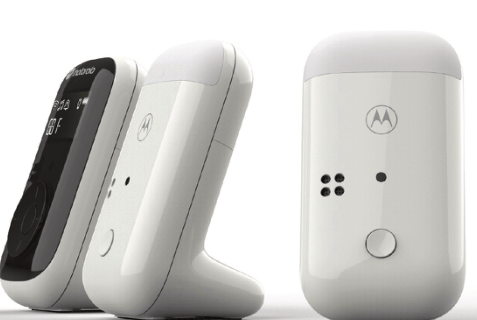
The PIP15 family is an audio baby monitor. A parent unit receives sound and shows status on its LCD; it does not show a nursery picture. The family guide describes a local digital radio connection in the U.S./Canada frequency band. Its instructions do not describe an app, internet connection or away-from-home phone stream. That makes the documented arrangement straightforward for a household that wants sound on a separate receiver, but a poor choice when checking a sleeping child visually or viewing from elsewhere is essential.
When two or more compatible baby units are paired, the parent unit can listen to one selected unit, select all connected units, or cycle through them. “All” allows the connected rooms’ sound to be heard together; cycling changes room every 15 seconds, so it is sequential rather than a simultaneous mix. The family guide says up to four baby units can be registered. That is a system limit, not proof that the PIP15-3 package includes any particular number.
Use the battery table by actual connected-unit count
The family manual’s parent-unit estimates change with the number of baby units in use: about 12 hours with one, 9 with two, 6.7 with three and 5.5 with four. Those figures help an existing owner plan charging, but they are not a runtime claim for a PIP15-3 box and not a controlled screen-on test. The baby and parent units use rechargeable AAA Ni-MH cells; the guide calls for a 16-hour first charge. It also warns that rechargeable capacity falls with age. If a multi-room setup needs to run for a long stretch away from outlets, compare the manual’s estimate for the number of units you actually operate with your routine rather than relying on the suffix.
Each baby unit has a night light with four settings, and the parent controls five lullabies. The parent can speak to an individual baby unit or all of them. Four VOX sensitivity levels let the owner adjust when sound detection responds; a separate beep can alert for sound from the selected units. The display shows the selected unit and link/battery/temperature status, not video detail.
Room-temperature controls are shared across rooms
The guide documents a temperature reading and high/low alerts, but the limits are set across all baby units rather than independently for each room. A reading is useful environmental context, not health monitoring; do not treat it as a medical alarm. If a baby unit loses its link, the parent display no longer has a current reading from that unit. For room-by-room thresholds or a camera picture, this family’s documented controls do not solve the requirement.
Safe placement and realistic range
Motorola’s instructions say to keep baby units and cords more than one metre from the child and never put a unit or cord in the cot. Use the supplied power equipment and keep the parent and baby units far enough apart to avoid audio feedback. The guide gives a maximum range of up to 1,500 feet outdoors in clear line of sight, while also warning that obstructions reduce it significantly. Walls, floors and interference make a household’s usable range different; the published maximum is not a promise that sound will carry through a particular home.
When to use this reference—and when not to shop by the label
If a parent unit or manual already in your home is marked PIP15-3 MULTI, the shared guide is useful for understanding selection, cycling, talk-back, alerts and safe setup. If you need a confirmed number of included nursery units, a current U.S. package, or a purchase link, this exact suffix is not sufficiently described. Motorola’s separate PIP15-2 MULTI U.S. listing identifies a two-baby-unit package; it is a different documented configuration, not evidence that PIP15-3 contains three. Verify the complete model and contents on the actual package before replacing a system.
Motorola PIP15 family User Guide (PDF) · North American Quick Start Guide (PDF).
Key details at a glance
| Camera-to-parent-unit connection | Local DECT radio link between baby unit(s) and the parent audio unit; the official family guide lists the U.S./Canada band at 1921.536–1928.448 MHz. No video or remote-phone operating plan is documented. |
|---|---|
| Manufacturer-stated open-space range | 1500 ft |
| Advertised maximum range claim | 1500 ft |
| Cameras in the reviewed kit | 0 |
| Maximum camera units supported | 0 |
| Video rooms visible at once | 0 |
More specifications and setup details
| Phone viewing away from home | No |
|---|---|
| User-replaceable parent-unit battery | Yes |
| Recommended stable operation uses home Wi-Fi | No |
| Audio-only system | Yes |
| Parent talk-back | Yes |
| Room-temperature readout | Yes |
| Preloaded lullaby count | 5 |
Use the exact model’s instructions for operating limits, supplied equipment and version differences.
Sources for this assessment
Check the room and the receiving setup.
Read the exact model's constraints, camera count and supervision limits before choosing a package.