
Your needs, this model
Does it fit your priorities?
Is the sound-only PIP11 enough if you want talk-back but do not need a camera picture?
Yes. Its local parent unit sends talk-back to the baby unit but shows no video. While talk-back is held, the parent unit cannot hear the baby's sound.
Explore this need in the finder →Would a parent-unit room-temperature reading and alert be useful?
Yes. The manual documents a temperature sensor and configurable high/low temperature alerts. It is a convenience reading, not a medical measurement.
Explore this need in the finder →Can the PIP11 meet a combined need for talk-back and room temperature in one audio setup?
Yes. Both controls are part of the same PIP11 parent/baby-unit arrangement; no separate camera or network mode is needed for them.
Explore this need in the finder →Audio-only, with more feedback at the parent unit
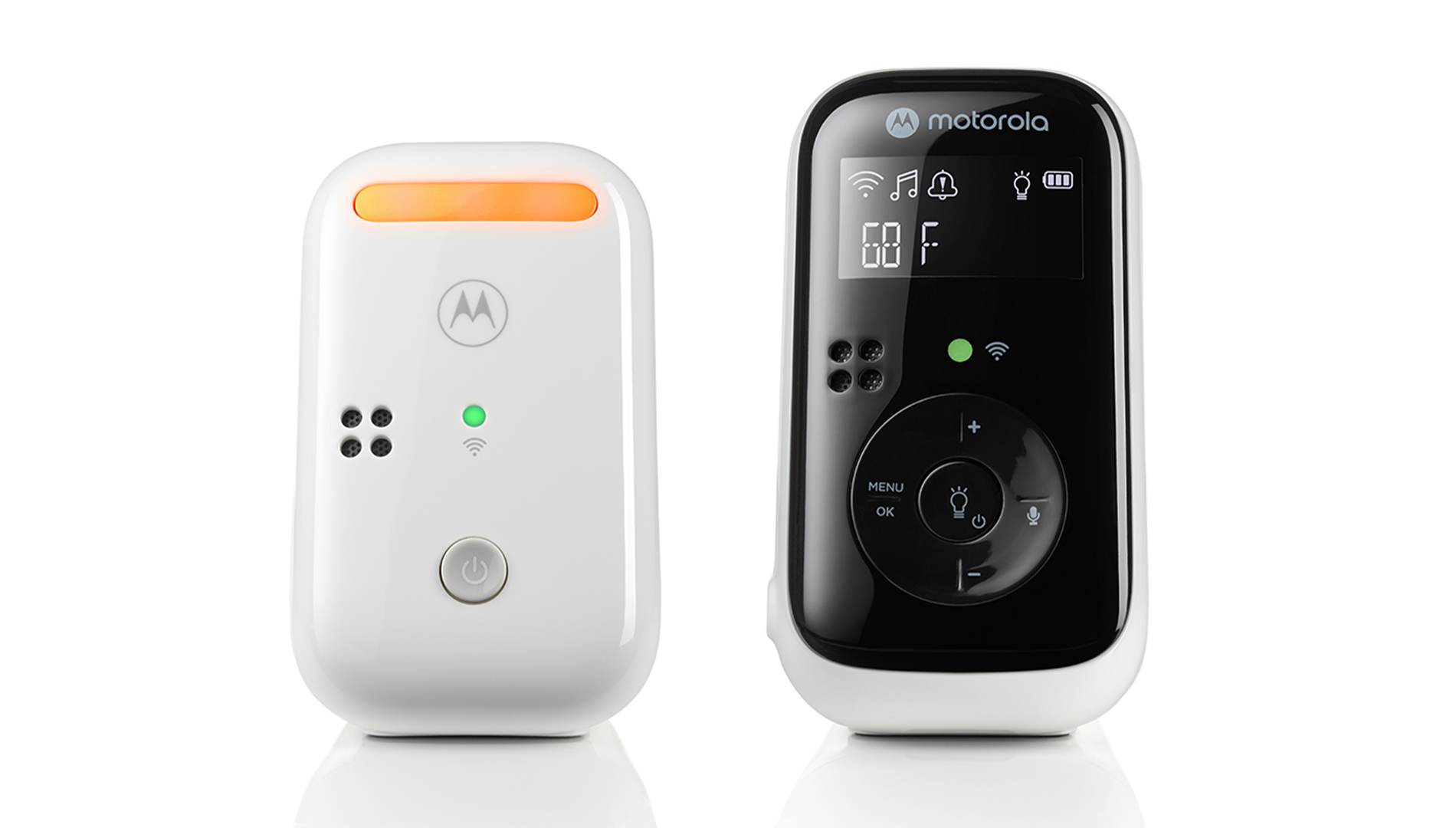
The Motorola PIP11 is still an audio-only monitor, not a small video monitor. Its dedicated parent unit receives nursery sound over a local DECT connection and adds a backlit LCD for text and room temperature, a talk-back button, lullabies and a night light on the baby unit. Those additions make it a more interactive choice than the simpler PIP10, but the LCD does not show a camera picture. Choose this system only if sound plus these controls is enough; a preference for seeing the room calls for a camera-and-viewer kit.
The exact Motorola Nursery support page identifies model PIP11, Ref 810036772532, and links the English U.S./North American user guide. Its U.S. shop listing describes the monitor as no-Wi-Fi and says the parent unit can display room temperature. There is no app to set up and no remote phone feed documented for the PIP11, so the parent unit needs to remain within the working local radio link.
Talk back, but expect to pause listening while you speak
The parent unit offers two-way talk. Hold the talk key to speak through the baby unit; the manual notes that you cannot hear the baby's audio while that button is held. That short pause matters if you were hoping to listen and talk at the same time. Talk-back can support a quick reassurance from the next room, but it is not an intercom with simultaneous two-way conversation and does not confirm that the child has settled.
The PIP11 also offers five lullabies, a built-in amber night light and a parent display that can show the room-temperature reading. The guide lets you select songs, adjust their volume and playback timer, switch the night light, and set high or low temperature alerts across 57°F–102°F (14°C–39°C). These are convenience features for a bedtime routine. A temperature reading is not a calibrated medical instrument or an assessment of a child's condition, and a lullaby is not evidence that a child is asleep.
One baby unit, not a two-room kit
The standard PIP11 guide lists one baby unit, one parent unit, the two AC adapters and two rechargeable AAA NiMH cells for the parent unit. It says the monitor can expand to as many as two parent units, but that describes additional receivers—not extra nursery transmitters or a simultaneous two-room system. The brand's PIP15-2 is a separate product listed with two baby units; do not treat the PIP11's receiver expansion as a substitute for that distinct kit.
The operating plans for this PIP11 review therefore treat the system as one baby unit and one room's audio at a time. If you need both rooms to remain audible simultaneously, require a manual that documents that arrangement and verify what comes in the exact package. A pair of parent receivers could let two adults carry a receiver, but it does not create a second source of sound.
Charging and range have practical limits
The baby unit must stay plugged into its supplied adapter. The parent unit uses two supplied rechargeable AAA NiMH cells; the guide asks for a 16-hour first charge. In ideal conditions, it estimates up to ten hours of use or up to fifteen hours in standby on one charge. Battery condition, volume and use affect that result, so keep its adapter available if the receiver needs to run for a long stretch. The battery's advertised use time is not a screen-on camera runtime—the PIP11 has no video screen or picture feed.
Motorola advertises up to 1,000 feet. The guide describes up to 160 feet indoors and up to 1,000 feet outdoors, and lists up to 300 metres line of sight. Treat these as manufacturer maximums, not a tested indoor guarantee. Household walls and interference change signal range; check the link from the rooms and locations where the units will be used. The monitor's link and alerts should not be treated as medical monitoring or a replacement for adult supervision.
PIP11 or PIP10—or a different kind of monitor?
Choose PIP11 if you want a local, no-Wi-Fi sound-only monitor and expect to use talk-back, the temperature display, lullabies or night light. Its included rechargeable parent batteries are more convenient for carrying around than PIP10's two AAA cells that you supply yourself. Choose PIP10 if listening and a muted-speaker sound indicator are sufficient and you would rather keep the parent unit's controls simple. Neither sibling provides a video feed, remote phone access or an established two-room audio mode.
If the parent needs a picture, a local video unit gives a different kind of information and tradeoff; the VTech VM819 review describes its compact 2.8-inch viewer, while the VM4263 adds remote camera movement. Those systems still require you to check the exact kit and room mode. If app access away from home is essential, compare a connected monitor and the network setup it needs instead of assuming a dedicated audio radio can reach a phone.
Before mounting, keep all cords more than one metre (about 3.3 feet) from the child and never put the baby unit or cord in a cot. The PIP11 user guide is explicit that a monitor is only an aid and not a substitute for responsible adult supervision. See Motorola's U.S. PIP11 listing, the PIP11 support page, and the PIP11 User Guide for exact setup instructions.
Key details at a glance
| Camera-to-parent-unit connection | Local DECT radio link; no Wi-Fi, app or camera picture in the reviewed package |
|---|---|
| Manufacturer-stated open-space range | 984 ft |
| Advertised maximum range claim | 1000 ft |
| Cameras in the reviewed kit | 0 |
| Maximum camera units supported | 0 |
| Video rooms visible at once | 0 |
| Phone viewing away from home | No |
| User-replaceable parent-unit battery | Yes |
| Recommended stable operation uses home Wi-Fi | No |
| Motion alert | No |
| Audio-only system | Yes |
| Parent talk-back | Yes |
| Room-temperature readout | Yes |
| Parent-unit batteries included | Yes |
| Preloaded lullaby count | 5 |
Use the exact model’s instructions for operating limits, supplied equipment and version differences.
Sources for this assessment
- Motorola Nursery PIP11 product page
- Motorola Nursery PIP11 Product Support, Ref 810036772532
- Motorola PIP11 User Guide, English EU/NA-US V5
- Motorola PIP11 Quick Start Guide, English/French North America V2
- Motorola U.S. shop PIP11 listing
- Motorola Nursery PIP11 exact-model product rendering
- CPSC exact-name search response for Motorola PIP11

Check the room and the receiving setup.
Read the exact model's constraints, camera count and supervision limits before choosing a package.