
Your needs, this model
Does it fit your priorities?
Is a separate audio-only local link enough when a camera picture is not needed?
Yes. The PIP10 sends sound to a parent receiver without Wi-Fi or a camera view. It cannot meet a need for a live picture.
Explore this need in the finder →Does its stated line-of-sight distance suit a small house without relying on phone access?
The exact guide lists a 300-metre line-of-sight maximum (about 984 feet), while Motorola also markets up to 1,000 feet. Neither figure guarantees reception through a given home's walls.
Explore this need in the finder →Would the simple PIP10 still fit if talk-back and a temperature readout are not essential?
Yes. The U.S. guide documents a muted-speaker sound indicator but not talk-back or a temperature display. Requiring either added function points to another exact model such as PIP11.
Explore this need in the finder →A simple sound-only connection, with no app or picture
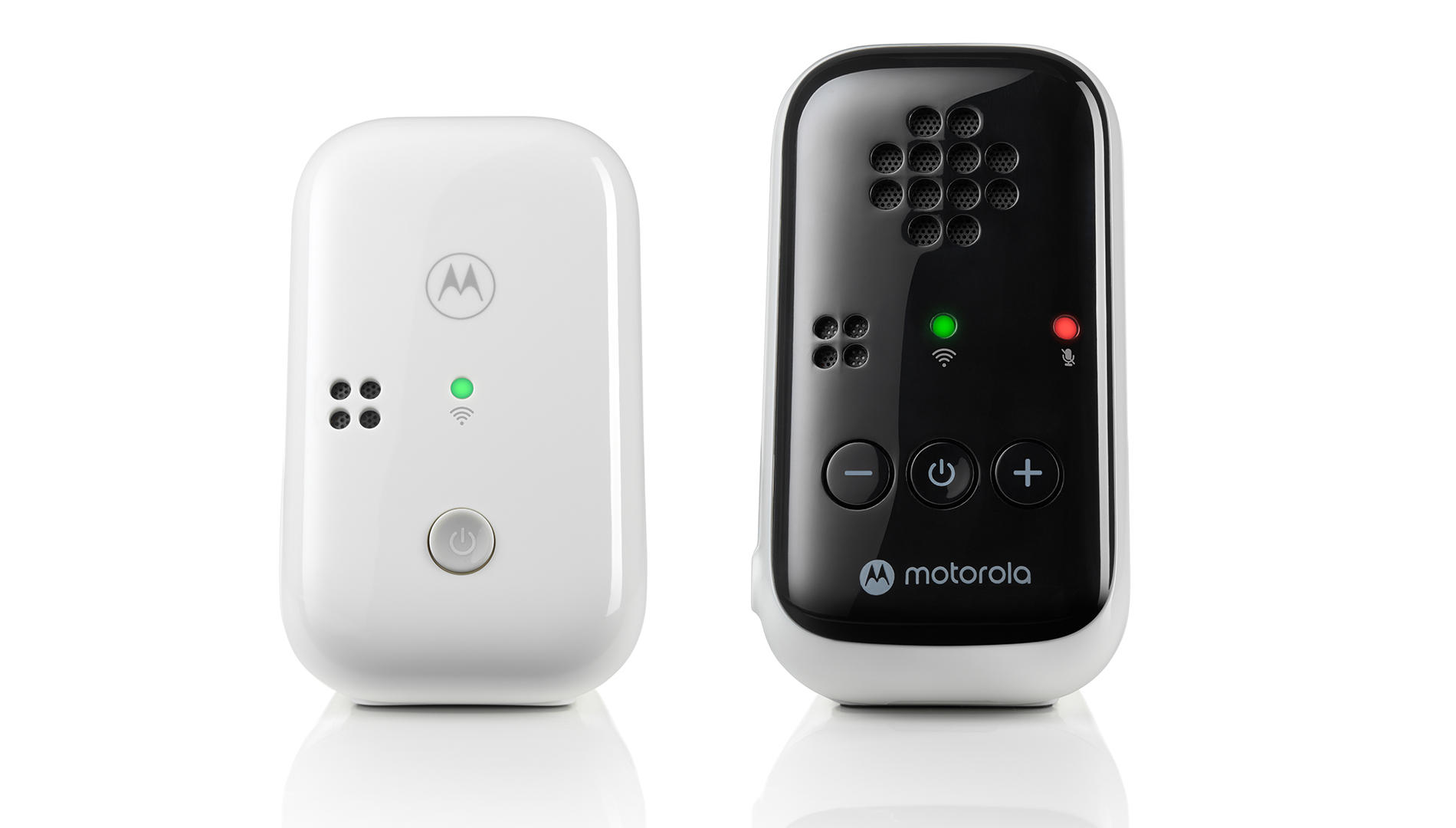
The Motorola PIP10 is an audio-only monitor for a household that wants a separate parent receiver and a direct local connection rather than a phone camera feed. The PIP10 has no image to check: the baby unit transmits sound, while the parent unit has speaker, volume buttons and status lights. That can be a sensible fit when a clear cry or stir matters more than a visual glance. If seeing the crib is essential, this is the wrong type of monitor even though its radio range headline looks similar to video products.
Motorola's U.S. shop listing describes the PIP10 as a no-Wi-Fi, no-app audio monitor using DECT. Its support page identifies the exact PIP10 and Ref 810036772525, and links a U.S. user guide. The guide specifies the U.S. radio band as 1921.536–1928.448 MHz and describes an interference-resistant local connection. These are manufacturer specifications, not a promise that radio will pass through every wall or floor in the same way.
What the parent-unit lights can—and cannot—tell you
The microphone is described as high sensitivity, and you control the speaker volume on the parent unit. When you mute the speaker, a red indicator flashes if a loud sound is detected by the baby unit. The manual says that visual sound alert is available only while the parent speaker is muted. It is useful if you temporarily want quiet from the receiver, but it is not a motion sensor, a camera, a record of what happened, or a substitute for hearing the room. If you keep the speaker unmuted, ordinary audible sound is the main way to monitor.
The parent unit also has a low-battery alert and an out-of-range alert. The product is expandable to as many as two parent units, but the standard PIP10 package is one baby unit and one parent unit; a second receiver should not be mistaken for a second room. The PIP10 is a one-room sound arrangement unless you have a specifically documented compatible multi-baby setup.
Plan for replaceable batteries, not a charging cradle
The baby unit must remain connected to its supplied AC adapter. The parent unit can be used from its own adapter or away from an outlet with two AAA batteries, which are not included. The exact user guide accepts either disposable AAA cells or rechargeable NiMH AAA cells. The receiver itself does not charge rechargeable batteries: take them out and use their separate charger. The manual gives up to ten hours on batteries, varying with the cell type and capacity; it does not define a controlled test condition. Think of that as a limited portable option, not a promise of a full day away from mains power.
This is a practical distinction from the PIP11. The PIP11 includes rechargeable AAA cells and adds talk-back, a temperature display, lullabies and a night light. Choose PIP10 when the extra receiver screen and soothing controls are unnecessary and you prefer the simpler set of controls; choose PIP11 if you would actually use those additional functions. Neither model sends a picture to a phone, and neither turns the room-temperature sensor into a health monitor.
Treat the range number as a maximum, then test at home
Motorola advertises up to 1,000 feet. The PIP10 user guide also states up to 160 feet indoors and up to 1,000 feet outdoors, and lists a 300-metre line-of-sight operating range. The outdoor figure is a best-case distance with few obstructions, not evidence about a particular home. Walls, floors, nearby radios and where the receiver sits can all change what reaches it. Test the link from the places you will actually use before relying on it, and keep the baby unit connected to its adapter as directed.
For a picture and separate handheld viewer, compare a local video model such as the VTech VM819 or VM4263; both add a camera image, while their reviews explain their screen and camera limits. For phone-away viewing, look at an app-connected system instead and account for its network and internet requirements. For two different nurseries, do not assume that support for an extra parent receiver means the PIP10 can listen to two baby units at once.
Who should choose the PIP10
The PIP10 suits someone who wants a straightforward local audio link, no Wi-Fi setup, an adjustable parent speaker and a muted-speaker sound indicator. It is less suitable if you want to see the baby, speak back, read a room-temperature figure, play lullabies from the monitor, or have rechargeable cells supplied in the box. If those are must-haves, the PIP11 is the more capable audio sibling. If the picture itself matters, move to a video monitor rather than expecting an audio receiver to act like a screen.
Follow the exact guide's placement instructions: keep cords more than one metre (about 3.3 feet) from a child, never place the baby unit or cable inside a cot, and mount it securely if using its wall slots. Motorola's guide calls the monitor an aid, not a substitute for responsible adult supervision.
Read the U.S. PIP10 product listing, the PIP10 support page, and the PIP10 User Guide before setup or purchase.
Key details at a glance
| Camera-to-parent-unit connection | Local DECT radio link; no Wi-Fi, app or camera picture in the reviewed package |
|---|---|
| Manufacturer-stated open-space range | 984 ft |
| Advertised maximum range claim | 1000 ft |
| Cameras in the reviewed kit | 0 |
| Maximum camera units supported | 0 |
| Video rooms visible at once | 0 |
| Phone viewing away from home | No |
| User-replaceable parent-unit battery | Yes |
| Recommended stable operation uses home Wi-Fi | No |
| Motion alert | No |
| Audio-only system | Yes |
| Parent talk-back | No |
| Room-temperature readout | No |
| Parent-unit batteries included | No |
Use the exact model’s instructions for operating limits, supplied equipment and version differences.
Sources for this assessment
- Motorola Nursery PIP10 product page
- Motorola Nursery PIP10 Product Support, Ref 810036772525
- Motorola PIP10 User Guide, English V8
- Motorola PIP10 Quick Start Guide, English/French North America V3
- Motorola U.S. shop PIP10 listing
- Motorola Nursery PIP10 exact-model product rendering
- CPSC exact-name search response for Motorola PIP10

Check the room and the receiving setup.
Read the exact model's constraints, camera count and supervision limits before choosing a package.